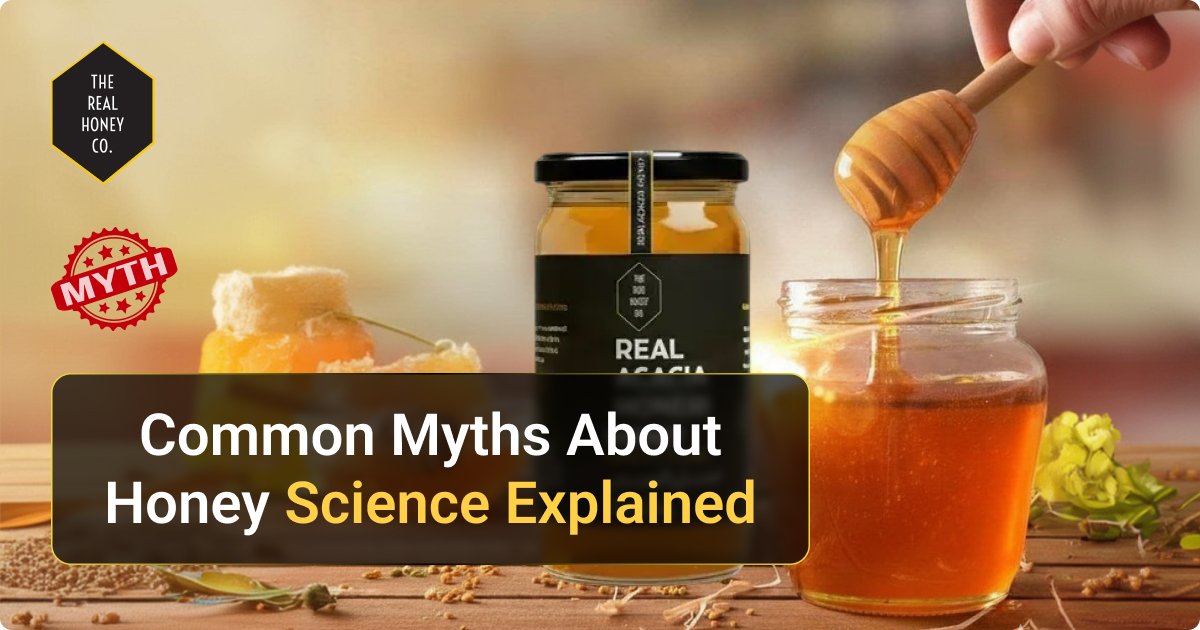
Think honey is just a sweet treat for your tea? Think again. Honey has been surrounded by myths for centuries, from “it never spoils” to “it cures everything.” But how much of this is true, and how much is marketing hype? Today, we’re diving deep into honey myths facts, and uncovering what science really says. By the end, you’ll know exactly what’s fact, what’s fiction, and how to choose the best honey for your health.
Honey is one of the oldest natural sweeteners known to humankind. Ancient civilizations treasured it. Modern wellness influencers promote it. Grandmothers swear by it. But somewhere between tradition and marketing, confusion crept in.
That’s why understanding honey myths facts matters more than ever.
Why Honey Has So Many Myths
Honey sits at the crossroads of food and medicine. Whenever something touches both nutrition and healing, myths multiply. Add centuries of cultural beliefs, and you get a sticky web of half-truths.
The Importance of Separating Honey Myths Facts
When you confuse myths with facts, you either overuse honey or avoid it unnecessarily. Neither is smart. Knowing accurate honey myths facts helps you make informed health decisions.
Let’s dismantle the biggest misconceptions.
Myth #1 – Honey Never Spoils
You’ve probably heard this: “Honey lasts forever.”
Is that true?
The Science Behind Honey’s Long Shelf Life: Pure honey has low moisture and high acidity. It also contains natural hydrogen peroxide. These factors create an environment hostile to bacteria. Archaeologists even found edible honey in ancient Egyptian tombs.
When Honey Can Actually Go Bad
Honey can ferment if:
- Moisture content increases
- It’s stored improperly
- The lid is left open in humid environments
Fermented honey smells sour and forms bubbles. So yes, honey lasts long, but only under proper storage conditions. Another critical point in the honey myths facts debate.
Myth #2 – Crystallized Honey Is Fake or Expired
Ever opened a jar and found solid grains inside? Most people panic.
What Causes Crystallization?
Crystallization is a natural process. Honey contains glucose and fructose. Glucose tends to crystallize over time, especially in raw honey. Faster crystallization often indicates less processing.
How to Restore Crystallized Honey Safely?
Place the jar in warm (not boiling) water. Stir gently. Avoid microwave overheating, which can degrade nutrients. Crystallization is proof of authenticity, not fraud.
Myth #3 – All Honey Is the Same
Honey is honey, right? Not even close.
Floral Sources and Their Impact
Bees collect nectar from different flowers:
- Sidr
- Acacia
- Sidr Honey
Each has unique flavor profiles, mineral content, and antioxidant levels.
Raw vs Processed Honey Differences: Raw honey contains pollen, enzymes, and bioactive compounds. Processed honey is filtered and heated, often reducing micronutrients. Understanding this is essential in honey myths facts.
Myth #4 – Honey Is Healthier Than Sugar in Unlimited Amounts
Yes, honey contains antioxidants. Yes, it has trace minerals. But unlimited consumption? That’s a myth.
- Nutritional Comparison: Honey and sugar both contain glucose and fructose. Honey has slightly more calories per tablespoon.
- Glycemic Index and Metabolic Impact: Honey’s glycemic index varies depending on the floral source. Some types spike blood sugar nearly as much as table sugar. Moderation matters.
Myth #5 – Darker Honey Is Always Better
Color equals quality? Not necessarily.
- Antioxidants and Color: Darker honey often contains higher antioxidant levels. But “often” is not “always.”
- Taste vs Nutrition: Some light honeys may have superior antibacterial properties depending on their source. Color alone cannot define value, another overlooked angle in the honey myth facts.
Myth #6 – Honey Cures All Diseases
Honey has legitimate medical uses:
- Wound healing
- Cough suppression
- Mild antibacterial activity
But it is not a miracle cure.
Evidence-Based Health Benefits
Clinical studies support honey for:
- Minor burns
- Sore throat relief
- Certain wound dressings
Where Claims Go Too Far
Claims about curing diabetes, cancer, or chronic diseases lack scientific backing. Separating hype from science is the core of honey myths facts.
Myth #7 – Heating Honey Makes It Toxic
This myth circulates widely.
What Science Says About Heating Honey: Heating honey reduces enzyme activity and antioxidant levels. That’s true. But toxic? No.
HMF Levels Explained: Hydroxymethylfurfural (HMF) increases when honey is overheated. High HMF indicates quality degradation, not poison.
Hidden Truths That We Miss
- Adulteration and Labeling Issues: Global honey fraud is real. Some products are diluted with corn syrup or rice syrup. Laboratory isotope testing detects this. Home “water tests” are unreliable.
- Antibiotic Residues and Quality Testing: In some regions, beekeepers use antibiotics. Without strict regulation, residues may remain. Reputable brands conduct third-party lab testing, often missed in honey myths facts content.
- Environmental and Bee Welfare Impact: Mass commercial beekeeping can stress colonies. Ethical sourcing protects biodiversity.
- Infant Safety and Botulism Risk: Honey should never be given to infants under one year old due to botulism spores. Adults are safe; infants are not.
How to Choose Genuine Honey
Reading Labels Correctly
Look for:
- Single-origin source
- Harvest region
- Lab-tested certification
Laboratory Testing vs Home Tests: Forget flame tests and thumb tests. They’re myths. Professional lab analysis is the only reliable verification method.
Where to Buy Pure Honey in Pakistan
Finding genuine honey locally can be tricky. Here’s what works:
- Trusted Brands: Sidr Honey, PurePak, Apis Pakistan, and The Real Honey Co, my top recommendation for authentic, lab-tested honey.
- Local Farmers’ Markets: Small-scale beekeepers often sell raw honey.
- E-Commerce Platforms: Websites like Daraz and local organic stores carry certified honey.
- Check Certifications: Look for ISO, organic, or lab-tested labels to avoid adulteration.
Buying from The Real Honey Co ensures purity, authentic taste, and all the real health benefits, with no compromises.
Conclusion
Honey is remarkable, but it’s not magical. Myths like “it never spoils” or “healing all diseases” have led many astray. By understanding honey myths facts, you can make smart choices, consume responsibly, and enjoy honey’s real benefits.
FAQs
Is raw honey always better than processed honey?
Not always. Raw honey retains more enzymes, but quality depends on source, storage, and testing.
Can diabetics consume honey safely?
In controlled amounts and under medical supervision. Honey still affects blood glucose.
Does organic honey mean pesticide-free?
Not completely. Bees travel miles, so full control over floral exposure is difficult.
Why does some honey foam on top?
Foam may result from air bubbles or mild fermentation due to moisture exposure.
What is the safest way to store honey?
Keep it sealed tightly in a cool, dry place away from direct sunlight.