Let’s not sugarcoat it: buying pure honey today is harder than ever. What looks like a golden jar of health might actually be a cleverly disguised mix of cheap syrups. Recent global investigations reveal that nearly 46% of honey tests samples are suspected to be adulterated, which means almost every second jar could be fake or diluted. That’s not just surprising, it’s a clear signal that consumers need to be more aware.
The demand for honey has skyrocketed due to its positioning as a natural superfood. But with rising demand comes shortcuts. Many producers dilute honey to increase volume and profit margins. The worst part? These products are often marketed as “pure,” making it extremely difficult for buyers to tell the difference. This is why learning practical and effective honey tests is no longer optional; it’s essential.
Why Modern Fake Honey Is Harder to Detect
In the past, fake honey was easy to spot. Today, it’s a completely different story. Manufacturers now use advanced syrups that closely mimic the chemical composition of real honey. These syrups are engineered to pass traditional testing methods, making detection even harder. Think of it like counterfeit currency, so refined that even experienced people struggle to identify it. That’s exactly what’s happening in the honey market today.
What Exactly Is Honey Adulteration?
Common Methods Used Today
Honey adulteration isn’t just simple mixing anymore. It’s a strategic process designed to fool consumers. Common methods include:
- Mixing honey with rice or corn syrup
- Harvesting honey before it naturally thickens
- Removing pollen through heavy filtration
- Blending low-quality honey with premium varieties
- Adding artificial flavors for enhancement
Each of these techniques reduces authenticity while maintaining appearance.
Hidden Health Risks of Fake Honey
Adulterated honey may look harmless, but it lacks the nutrients that make real honey valuable. Pure honey contains antioxidants and enzymes that support health, while fake honey is often just sugar in disguise. Regular consumption of such products can lead to increased sugar intake without any real benefits. Over time, this can impact overall wellness.
Why Most Home Honey Tests Fail (Truth Revealed)
Popular Myths Debunked
Many viral honey tests simply don’t work anymore:
- Water test can be manipulated
- The thumb test depends on viscosity
- Ant test is a myth
- The flame test is inconsistent and risky
These methods are outdated and unreliable against modern adulteration.
Science Behind Test Limitations
Advanced syrups now replicate honey’s density and texture, making simple tests ineffective. That’s why a combination of multiple honey tests is always recommended instead of relying on one.
7 Proven Honey Tests That Actually Help
1. The Label & Ingredient Test (Most Ignored): Always check the ingredient list. Pure honey should contain only one ingredient: honey. Any mention of blends or syrups is a warning sign.
2. The Aroma & Floral Source Test: Pure honey carries a natural floral scent. If the aroma feels artificial or overly sugary, it may not be authentic.
3. The Crystallization Behavior Test: Crystallization is a natural sign of real honey. If your honey never crystallizes, it may be overly processed or adulterated.
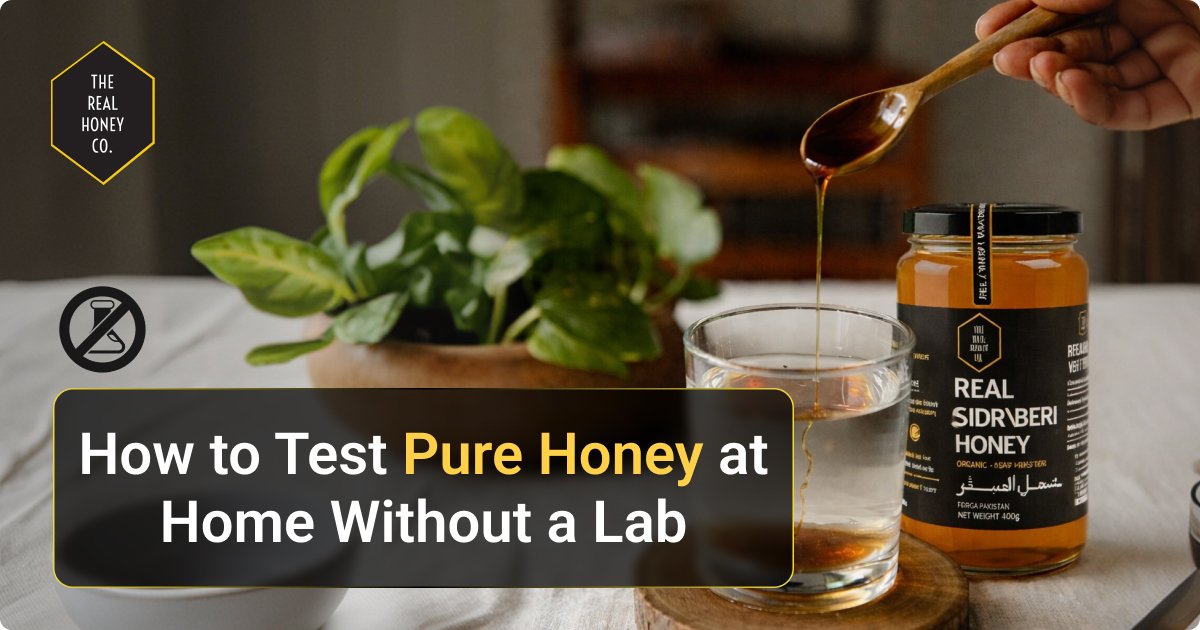
4. The Water Dispersion Test (Advanced Approach): Pure honey settles and dissolves slowly, while fake honey disperses quickly.
5. The Vinegar Reaction Test: Foaming when mixed with vinegar may indicate impurities.
6. The Heat & Caramelization Test: Pure honey caramelizes smoothly; fake honey may bubble.
7. The Paper Absorption Test: Pure honey does not soak into paper easily, unlike diluted honey.
Lab Testing vs Home Honey Tests
Professional Testing Methods Explained: Advanced lab methods like NMR and isotope testing provide accurate results and detect even minor adulteration.
Accuracy Comparison Table
| Test Type | Accuracy | Cost | Best For |
| Home Honey Tests | Low–Medium | Free | Quick checks |
| Sensory Evaluation | Medium | Free | Initial screening |
| Lab Testing (NMR) | Very High | Expensive | Guaranteed results |
Why Buy Raw Honey Online
Buying raw honey online has become one of the smartest ways to ensure quality if you choose the right brand. Unlike mass-produced supermarket honey, raw honey sold online often comes directly from beekeepers or trusted producers, which means fewer chances of adulteration. When you purchase from a reliable brand like The Real Honey Co, you gain access to transparency, traceability, and quality assurance. Online platforms allow brands to share detailed product information, sourcing methods, and even batch testing results, something you rarely find in local retail stores. Another advantage is variety. You can explore different floral sources such as wildflower, sidr, or acacia honey, each with a unique taste and benefits. Plus, online stores often provide fresh batches, ensuring you receive honey in its most natural form.
Conclusion
Spotting adulterated honey has become more challenging than ever. With advanced techniques used in the market, relying on outdated methods isn’t enough. The key is to combine awareness, smart buying decisions, and multiple honey tests to make informed choices. Understanding how real honey behaves, its texture, aroma, and natural changes, can help you avoid low-quality products. And when possible, always choose trusted brands that prioritize transparency and quality.
FAQs
Which honey test is most reliable?
A combination of label, aroma, and crystallization tests works best at home.
Does pure honey always crystallize?
Yes, most raw honey crystallizes naturally over time.
Can fake honey taste real?
Yes, modern adulterants are designed to mimic taste.
Is raw honey better than processed honey?
Yes, raw honey retains more nutrients and natural enzymes.
Where should I buy pure honey?
From trusted sources or reliable brands like The Real Honey Co.